
Fix the Fixing Problem
With multiple scanners detecting endless overlapping issues, the gap between finding vulnerabilities and fixing them keeps growing. Backline automatically and consistently closes this gap by deduplicating and prioritizing vulnerabilities, then generating, testing, and delivering trusted production-ready fixes for code and configurations vulnerabilities at scale
Feel The Radical Impact
Backline doesn’t just get you closer to remediation with tickets advice and recommendations. We get you as close as can be by actually FIXING your vulnerabilities in the safest way. Our customers turn their vulnerability backlogs into measurable security gains. Here’s what teams typically achieve:
Reduced Risk
Fix safely with minimal engineering effort
Faster MTTR
Expedite remediation across all vulnerability types
Consistent SLA
Always meet SLA goals with automated remediation
Fix At AI Speed
Backline consolidates vulnerabilities across scanners into a single, manageable view. Related findings are grouped, duplicates eliminated, and fixes applied across clusters instead of one by one. The result: fewer tickets, fewer PRs, and a backlog that shrinks dramatically at a speed no manual process could match, and with minimal engineering effort.
Focus On What Reduces Risk
Backline ensures effort goes where it counts. Vulnerabilities are ranked by severity, SLA, exploitability, reachability, and asset importance. Non-critical issues are de-prioritized, while actionable ones are resolved through autonomous or hybrid workflows. Security advances on real risk reduction, while engineers stay in control of what gets merged.
Deliver Safe & Trusted Fixes
Our agents gather the context they need: languages, build system, dependencies, CI checks, and even unit tests. They manage version upgrades, handle breaking changes, update files, images or configurations as needed, and even add tests if coverage is missing. Each remediation includes a clear plan and a ready-to-review PR, linked directly to the originating findings.
Confidence Through Collaboration
Backline’s team of AI agents don’t just act, they interact. Each proposed fix comes with context, reasoning and validation, so teams can review, dig deeper, re prioritize if needed and finally approve with full confidence. Over time, every interaction strengthens trust and accelerates autonomy, turning guided collaboration into continuous, verified remediation.
See Progress, Not Problems
Backline redefines the way remediation is tracked. Instead of dashboards filled with problems, you see progress: issues resolved per scanner and use case with continuous improvements in SLA, MTTR, and risk. Clear outcome driven metrics that finally turn vulnerability management into measurable vulnerability remediation.
The Backline Method
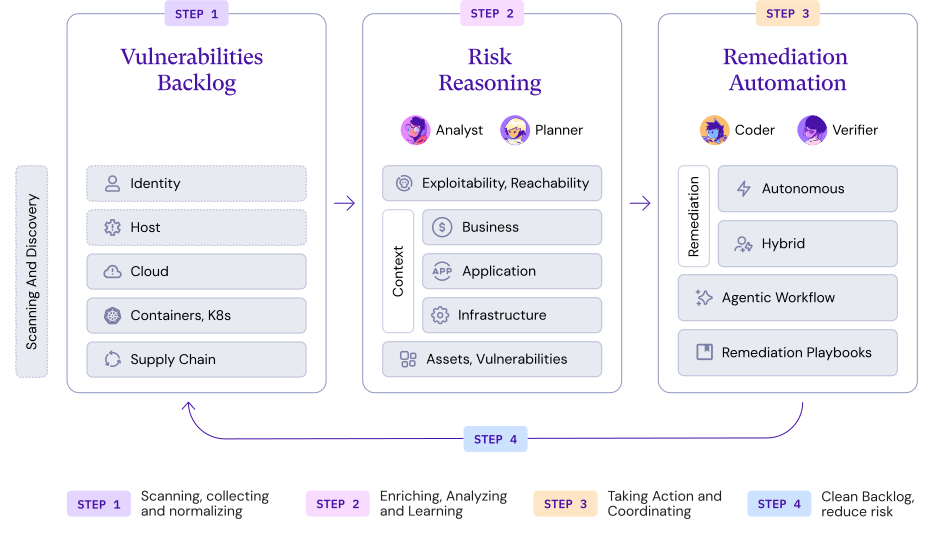
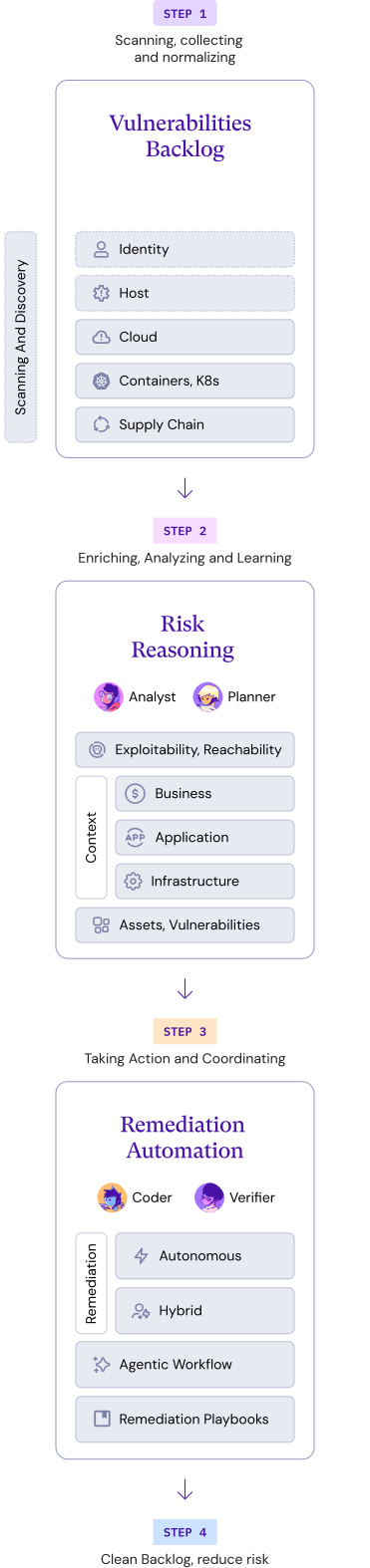
Backline plugs into your security stack to centralize every type of vulnerability. Our AI agents ingest your environment’s context, match issues to the right remediation playbook, and generate a plan of action. Then they develop fix for the code or config and return clean, production-ready output into your apps and infrastructure.
Product FAQ
We tackle the heavy lifters of your security backlog, including open-source dependency vulnerabilities (SCA), container image CVEs, and Infrastructure as Code (IaC) misconfigurations. We operate across the entire stack, from application code to cloud-native manifests, to ensure your fixes are as robust as your builds.
On June 2026, Gartner introduced Autonomous Exposure Remediation to describe security systems that use AI agents to actively fix vulnerabilities across code and infrastructure. For years, the security industry focused heavily on visibility and detection. This focus created a massive gap where the speed of threat discovery completely outpaced human capacity to patch the flaws. Security operations centers are currently drowning in high-fidelity alerts that they lack the resources to resolve.
Traditional security tools act like an advanced camera system that records an intruder breaking in but does nothing to stop them. AER changes this paradigm by turning your security stack from a passive warning network into an active defense architecture
The platform performs a deep-context analysis of your dependency graph to identify the most stable upgrade path that eliminates the vulnerability without introducing breaking changes.
Safe Remediation is our commitment to production stability, ensuring every autonomous fix is vetted through a rigorous verification layer before it ever reaches a human for review. By running existing unit tests and checking for regressions, the platform acts as a quality gate that prevents the "fix" from becoming a new problem. This context-aware approach is giving you the confidence to move from manual "whack-a-mole" to true autonomous resolution.
Yes, the platform identifies and flags vulnerabilities where no safe upgrade path exists or where a resolution would require a fundamental architectural change. Instead of forcing a risky patch, we provide the deep-context analysis and prep work, then hand the issue over to your engineers with a clear explanation of the constraints. This ensures that autonomous action never comes at the expense of system stability or human oversight.
Since every fix is delivered as a standard Pull Request, you can revert any change using your existing Git workflows and CI/CD rollback procedures. We treat autonomous code with the same version control rigor as human-authored commits, ensuring that a "fix" never creates a permanent or irreversible state in your repository.
Before any fix is proposed, we execute a comprehensive validation layer that includes running your existing unit tests, performing dependency checks, and ensuring "no regressions" are introduced. The platform functions as an automated QA engineer, validating that the proposed patch is context-aware and stable within your specific environment.
Backline connects directly to your existing production scanners to ingest raw vulnerability data. Our platform uses specialized AI agents to analyze the actual exploitability of the threat in your specific runtime environment. The agents check code reachability and cloud configurations to separate active threats from dormant packages.
The agents then generate and verify production-ready fixes to close the exposure window before attackers can respond. Every remediation plan goes through our automated verification layer to test for system regressions. This deep validation ensures the security patch matches the security baseline of your enterprise infrastructure.